Wednesday, August 17, 2011
Rivarly between refugees in Daadab and local host community
The increasing number of starving Somali refugee entering Kenya has been overwhelming, In a country already faced its own starvation, the influx of new arrivals is making the situation worse.
Daadab refugee camp now worlds biggest camp is full leading humanitarian emergency that now threatens thousands of lives. The camp which was meant for 90,000 people, it's current population is expected to be more than four times its capacity.
A sprawling desert in North Eastern Kenya, Daadab, comprises of three camps, Ifo, Dagahaley and Hagadera camps. Hundreds of new arrivals trek for weeks in the hope that the 'desert camp' will be better than home.
“we come here because there is nothing left at home, there is the fighting and help doesn't get to where we live so we came here” says a mother of three who arrived a few days ago.
On arrival, the new arrivals would queue for long hours in the heat where they await to be given enough supplies to create a make make shift home, cooking utensils, a mat they can sleep on and most importantly ration card where they would be able to get food.
However the huge arrivals doesn't seem to go well with the host community in Northern Kenya as they too fill the pinch of overcrowding by the refugees, as a county they do not have much going on and the situation is made worse.
North Eastern Kenya, home to the camp and mainly Somali residents, has been neglected for a long time by the central government and the residents have had to depend on humanitarian agencies.
Since independent the county has not seen any developments from the government.
The region that has largely remained deserted by the central government since independence, lack of infrastructure among other problems have made the situation worse.
There have been constant rivalries between the residents in North Eastern Kenya and the refugees from the camp.
The residents have complained that the government of Kenya has considered them as refugees, for this reason they have been forgotten and the humanitarian organisations just cater for the refugees needs.
To reduce the constant chaos between the two groups, the humanitarian organisations also started different water projects for the community. Although different humanitarian organisations have raised a red flag and launched international appeal campaign to help raise funds to assist drought hit population, much more still needs to be done.
Failure of the government to plan and focus on long term projects has made the situation unbearable for the residents from the upper North Eastern region, and now it’s worsened by the huge number of refugees streaming in to the country.

Are they the Perpetrators of famine in somalia?

The faces of hunger and famine have become part of recurrent shame as drought hits the East African region once again. I have to say, this did not come as a surprise – the writing has been on the wall as early as last year August.
The weather man had predicted that we should be prepared for the hard times ahead and as the region we needed to plan before the situation becomes fatal but due to poor planning and lack immediate help, the situation was made worse.
In the war torn country Somalia, the situation is made worse by the conflicts between the weak transitional government and militant group Al Shabaab which controls much of Southern Somalia.
The group which is said to have links to Al Qaeda have not made it easy for the Somali civilians, even after the famine situation was reported early they blocked outside help from getting into the country.
Fear of killing Aid workers, kidnapping and charging these organisations made the international community worry that they could be funding the group indirectly leading to some of the humanitarian organisations to close down their offices in Somalia.

The fighting and corruption between the Western backed Transitional Federal Government (TFG) is turning out to be an embarrassment to a country seeking for an international help.
The TFG which lacks the people’s support has failed to put aside policies that would save the population and has instead been accused of prolonging the conflict and famine in Somalia. Corruption and infighting in the government has worsened the situation.
The international community are also to blame. They were briefed and warned of the current situation long before it even started but they have failed to deliver help in time. The situation was getting out of hand with hundreds facing starvation and that’s when the internal community reacted.
Earlier on, military group Al Shabaab taxed food that was coming from the humanitarian organisations, and this made western countries delay funding which would have done something to help the current situation.
The world has undoubtedly responded immensely well to the current situation, but it would be a happy day for everyone if as much focus was placed on long-term programmes to build spirit in communities, as is now on placed feeding the hungry.
Although the current situation can also be blamed on climate change, failure of governments to focus on agriculture and irrigation schemes; until that time when a different approach is taken, the cycle is bound to reoccur.

Failure of planning by Kenya goverment to blame for famine

Suddenly there is drought again! Although some the pictures we see once again maybe shocking this is perennial shame that we face each year as a country. Personally am no stranger to stories of people, including children dying due to starvation.
I have witnessed animals dying in their hundreds, sometimes in their thousands, men and women suffering from scorching sun with no water to quench their thirst. But this year, the situation has gotten out of hand.
Ethiopia, Somalia and northern Kenya is facing its worst drought in 60 years with 10 million people said to face starvation and the UN reporting this as an ‘emergency situation’.
During this time, as much as I wish I was in Kenya covering first hand about the situation in the region, am instead in the UK attached to one of the biggest newspaper in the world The Guardian and I can only rely on information I get by friends and contacts in the ground and the stories I read about the situation, but then again again I can actually relate to it.
In Kenya, the situation could have been avoided, the dry spell was long predicted and the government could have acted sooner but as always we never act until the situation gets desperate.
Personally I have the Kenyan government to blame, they have failed to invest in arid and semi-arid areas which has caused the regions to be perennially vulnerable to drought.
Once you are in the region you will feel the absence of infrastructure and basic services such as health and education. The limit access to national and international market has made the lands vulnerable.

Two years ago, National Drought Contingency Fund was formed to accumulate money for drought responses during good years and quickly disburse it during times of need, but this was never to happen.
Despite the presence of drought warning system, the government strategies remain gloomily wanting, therefore the country is again caught unprepared and in dire need of humanitarian crisis.
Earlier this year through its Ministry of Agriculture, the government reported that there was food stock to last for almost a year and contingency measures were put in place following drought forecasts.
Four months after the announcement, 3.5 million are facing starvation in the country begging the question where did the stock go?As if it’s not bad enough with the worst crisis of drought, famine emerge at a time when the food prices have risen to an alarming level.
The situation is made worse by the hundreds of refugees arriving from Somalia who flee the war torn country crossing the border into Kenya in one of the biggest refugee camp which is now on the verge of collapse because of its high population.
The biggest setback faced by Kenya like many other African countries, is lack of forward planning and inadequate response to crisis.
This should serve as a lesson to the Kenyan government and the East Africa as a whole, a contingency plan for food security should be planned given the known of drought cycle.
Urgent reviews of the food security policy and its sustainability should again be planned and anything short of this would spell a vicious cycle of more doom come next year.
Thursday, November 25, 2010
FROM A REFUGEE TO A MUSIC ICON: The Story of Kidum
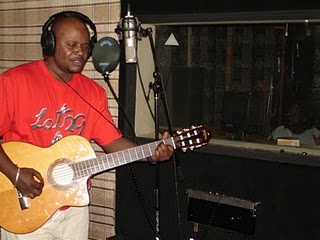
Currently one of the top artistes in Eastern Africa, his entry into the public eye has been far from easy. Yet, Kidum 36 has cemented his position as one of East Africa’s most versatile singer as well as skilful master drummer of his time.
Born in 1974 in the remote village of Kinama, Northern Burundi, the artist whose real name is Jean Pierre has overcome the hurdles that would have discouraged many.
Kidum wasn’t special or so he thought. He describes his childhood as average but one who had a deep fascination for music ever since he could remember.
That’s how his pursuit for drums begun. “All I could find were some buckets we used at home for washing, I upturned one of them, took two sticks and started hitting them according to the beat of the music as it played.” He says.
When he was only 12 years, he played in church and one of the famous Burundian musician spotted him Kidum admits that this was his platform and after 5 years with the band he left for another band, Electric Power which only lasted for while before the war started and he had to flee escaping the war.
Burundi, one of the world's poorest nations, is now emerging from a 12-year, ethnic-based civil war. The ethnic violence sparked off in 1994 made Burundi the scene of one of Africa's most difficult conflicts although its now on the recovery process, it faces the formidable tasks of reviving a shattered economy and of forging national unity.
Its is when the war broke out that Kidum found himself in refugee status destined for Kakuma refugee camp where he stayed for a while before moving to Nairobi, a camp where most of his country mates are after they escaped from the war. “I was alone only 21 years and I followed another group that was coming to Nairobi but we headed to Kakuma first and I found my way to Nairobi” he says
On arrival in Nairobi, he visited several studios being turned away as he understood very less of both Swahili and English but he was taken by one producer and he has since picked up.
Born from a Tutsi mother and Hutu father, Kidum is out with his guitar to pass the tall order of peace in the softest language.
He says that although he did not make it as a politician, he continues to sing for peace in his home country hoping that one day people would learn to live in peace
Back in his home country Kidum is an icon of hope and reconciliation to the many who have been caught up in the long standing civil war in between the Hutu and Tutsi bribes in Burundi.

His first album, Yaramenje (2001), established Kidum as the voice of peace in the Great Lakes region. He followed it up with the hugely successful Shamba album, released in 2003. Ishano (poison) released October 2006 by Soundafrica,
Things went from bad to worse even after releasing his third album, Ishano.
A few videos later, and persisting with his band to the extent of playing for free in pubs, by 2007, fans started appreciating his music.
In a series of homecoming concerts staged in October 2006 in both Burundi and Rwanda, Kidum received standing ovations and praise from Rwandese President, Paul Kagame for his song Amosozi (tears).
After the peace concerts, Kidum was named the honorary ‘prefect’ of musical and creative arts in Bujumbura after a series of countrywide performances in 2007.
His fourth and latest album features songs, like Mshoma, a wedding song and in this he teams up with Nameless in Greedy and Nitafanya with Tanzanian diva Lady Jay Dee.
The peace ambassador has also released songs with a Rwandan born Frankie Joe about peace, War and Hunger mostly focusing on real life issues.
The vocal prowess exhibited in his songs is unmistakable and will leave you yearning for more.
Even as Kidum has no doubts saying his band is among the best, he is afraid that his smooth success has come with enemies.
In February this year, there was a rumour mills that Kidum had died.
But he adds that this will not make him fall and will continue giving his music and fans his all for he believes that he has the power to do it and only God can give him the strength.
The Story of Joseph Lekuton

Choosing the plight of the marginalized to taking the next flight out; story of MP Joseph Lekuton
For many they would kill for an opportunity of studying in one of the most prestigious university in the world – Harvard but not the Laisamis Member of Parliament who has instead choose to continue representing his people as an MP as preferred to going and do a doctorate in the United States.
Representing one of the marginalized community in the country, this was a God send opportunity for the youthful MP but after hearing the cries of his people who do not wish him to go, he is staying.
For many, in Laisamis area, accessing education is a privilege of a few. Coupled with lack of schools and the regions culture education is a pipe dream for many.
Many boys had pictured their lives as Maasai warriors and cattle herders. If you are among the lucky few to get education, one had to walk for hours to get to the nearest school and toppled with lack of money discouraged many.
This was the case of the now area MP Lekuton, a man who defied all odds and pursued education to the highest level in the best of the best universities in the world.
Lekuton who did his degree in Education at Harvard University has now got a scholarship to do his doctorate at Harvard.
The Maasai born Joseph Lekuton shot at education was by ‘accident’ after his older brother who was chosen to go to school but he did not want.
At the age of 6, he had already started his education at the missionary boarding school in Laisamis.
8 years later, Lekuton finished his primary education but he could not continue his education due to lack of school fees. But fate as fate would have it, former President Daniel Moi happened to know about the young Lekuton and offered him a scholarship at the Kabarnet secondary school.
He then cleared his A levels doing well in his final exams and got a job at bank as a clerk. The young Lekuton then received a letter of admission at St Lawrence University in the US under the scholarship for the African Students.
After telling his mother who still leaves at a cow dung hut about the news she promised to do whatever it takes to get his ticket so that his son could get education he needed.

His family then sold most of his cattle’s and the rest of the villages helped and he got his ticket to the United States. In four years, Lekuton graduated from St. Lawrence with both a bachelor's in economics and government and a master's degree in education at Harvard University all under a scholarship programme.
He then worked as history teacher in Washington DC at one of the schools in the United States. He was then named a National Geographic Emerging Explorer for his work in sharing the culture of Kenya with America, including efforts to share educational resources with nomadic children through the BOMA Fund and Cows for Kids.
“He was then sponsored by the National Geographic to write a book called Facing the Lion: Growing Up Maasai on the African Savanna which was used to educate about the challenges of Nomadic community in Kenya.
Its in 2006, that he made up his mind to come and run for political a position he says he would be able to serve the people who helped him pay for the tickets to get his education.
After the plane crash killed the area MP died in a plane crash, he vied for the position during the by election and he won. As a first timer in the 10th parliament he has recorded impressive record building boreholes in Loyangalani, Merile and in Laisamis town.
His passionate actions have led to a number of accolades and prestigious awards, including Kenya's Order of the Grand Warrior, a presidential award for exemplary service to his nation.

Marsabit County- Tourism Hub

For a region that had largely remained deserted by the central government since independence, the ushering of a new constitution that provides a new system of governance came as a sign of liberation for the residents.
Marsabit County that brings together 4 constituencies in Kenya Northern frontier are can now breathe a sign of relief that at last the power to decide how resources will be distributed now lays in the hands of the residents.
Even before it became a country, the larger Marsabit district was one of the biggest districts with the size of central and western provinces combined.
Once made up of North Horr, Saku and Laisamis constituencies, the Marsabit County will now include the Moyale constituency. This home to the nomadic community that has faced challenges with questionable help from the central government.
Water being the salvation for any life is a rare commodity and only found on shallow wells. Now with the county edition, the residents will be able to hold their leaders accountable.

Insecurity has also been a major source of fear and the most horrific being the 2005 Turbi massacre where hundreds were killed. The incident which took place in July 12that saw thousands of people mostly from the Gabra clan killed by Borana tribesmen.
It has been referred to as one of the deadliest instance of ethnic violence in Kenya. the people killed were buried in mass graves in Turbi desert.
The infrastructure also comes as a major challenge for the one who would have the responsibility to run the county. The road which has taken decades to be built only reaches a few kilometers after Isiolo.
The closest that the tarmarcked road reaches is the town called Merille 150km away from Marsabit country and clearly poses a challenge to the person who will be incharge.

Good health care in Marsabit and its far flang areas of Kargi, Korr, Turbi among others is a pipe dream for many, with no hospitals and lack of facilities, health care poses as a challenge.
The Marsabit county despite being a deserted region in Kenya has a lot to offer in terms of untapped tourist destination. Marsabit is home to one of true desert in Kenya, a scenic picture despite its bareness lies the Chalbi Desert. The desert is located east of Lake Turkana, the largest permanent lake in the world.
This barren vastness stretches 100km from east to west is also a possible Oil area. While here we meet international oil explorers who have flocked the area hoping to smack the black gold.
“We have been here for the last month, we have visited several areas and although so far there is nothing but we are still here for sometime hoping we would get something” says Pian chinc from African Oils a company that has been commissioned for the work.
A ride towards Loyangalani town on the shores of Lake Turkana is a spectacle, lake in a desert is itself amazing but this one with its dramatic scenery even more so.
Foreign tourists flock the area and at the far end enjoying themselves.
The arid beauty of the giant Lake Turkana spreading out in the desert landscape will impress you.
Loiyangalani, Now a cosmopolitan community of Rendille, Samburu, El Molo, and growing numbers of Turkana all depending on fish from the Lake.
The Lake could support a lucrative fishing industry.

At the far end of the town where there is Elmolo bay desert museum stands, behind the lone structure is the vast Lake Turkana stretching more than 150 km, Less than 30 kilometers east of Loiyangalani is Mount Kulal.Kulal is one of three International Biosphere Reserves in Kenya.
The location is always windy but from time to time, sudden wind whip down from Kulal to the lake turning its placid waters into a tempest in minutes. The track passes Loiyangalani and leads to the headquarters of Kenya's most remote National Park, Sibiloi, at AIia Bay.
Recently the area has become a home to Kenya’s second wind power generator after Gitson Energy secured financing from the US.
The new constitution has aroused interest among some individuals who want to be in charge of the country that is a multibillion livestock industry.
Potential candidates who have shown their interest in the county seat are Jarso Jillo Falana Marsabit Women Advocacy and Development Organisation Programme Coordinator, Nuria Agollo, Molo Adika who works for Arid area in Moyale and Alice Kureya a Development Officer for an International NGO who will be expected to transform the county.

Omar al-Bashir and the two wedding rings.

In some of most strategic intersection of Sudan's capital Khartoum, there are huge campaign billboards with the picture of President Omar al-Bashir, and next to him there are two wedding rings.
One ring is black and the other one is white, the two are held together by a ribbon with the colors of Sudan's national flag.
The black ring symbolises the country's south, mainly inhabited by black African tribes, while the white one represents the mainly Arab north.
It's a message the incumbent president wants no one to miss, one he continually hyped up during a vigorous and well organised campaign that took him to most parts of the country: that he will keep the country united at whatever cost.
But unity is what seems to elude Sudan by the day.
The referendum is part of the 2005 peace deal that brought to an end more than two decades of civil war fought over ethnicity, oil, religion and resources.
Intended to set Sudan on the path to democracy and make unity more attractive to the people of the south, the polls seem to be going against the very intentions for which they were included in the peace deal.
Al-Bashir has publicly stated that he would accept secession.
"If the result of the referendum is separation, the Khartoum government will be the first to recognise this decision. We will support the newborn government in the south," he said in January while addressing a public meeting in the south.
Many doubt he is sincere, however.
Division will be a bitter pill for him to swallow.
Most of Sudan's oil is in the south and he would not want to be seen as the man under whose watch Sudan got divided with the possibility of follow-on Balkanization looming large.
South Kordofan and Blue Nile states, in particular, are a grave concern as both have previously fought alongside the south.

South Sudan vote is 'Time bomb'

Sudan is a "ticking time bomb" in the run-up to a scheduled January vote on independence for the country's oil-rich south, Hillary Clinton, the US secretary of state, has said.
Clinton says that it was “inevitable" that the south would vote to break away and form an independent state.
She told an audience at the Council on Foreign Relations that the US, the African Union and other international partners are trying to ensure the vote goes smoothly.
She added that the south is not quite capable of summoning the resources and the north has been preoccupied and is not inclined to do it.
The referendum would be the capstone of a 2005 peace agreement between the government in Khartoum and the Sudanese People's Liberation Movement (SPLM), the main opposition group in the south.
She said that "The real problem is, what happens when the inevitable happens and the referendum is passed and the south declares independence," Clinton said. "What happens to the oil revenues? ... This is going to be a very hard decision for the north to accept."
SPLM officials have held a number of recent meetings with their counterparts in Khartoum to discuss the vote.
Officials from the south have been pessimistic about the outcome of those meetings: Yasir Arman, a senior member of the SPLM, accused the north of trying to "buy time" and delay preparations for the vote, according to the Sudan Tribune.
Experts have been warning that the outcome of the referendum would take the country back to the chaos but Yet despite gloomy warnings from outside, there is an incredible sense of optimism and expectation on the streets of Juba.

South Sudan vote

I got a chance to visit South Sudan to get a first hand look at the hopes and expectation that have arisen as Sudan prepares to go to the ballot box that will most probably see the split of Africa’s biggest nation
Many returning refugees such as Deng see the upcoming referendum as the ultimate crowning moment to years of healing and reconstruction by once an ailing region.
“We have fought and lost loved ones, many of us the only thing we can remember is the heartaches we went through and I do not want to see my children grow up like I did” said Deng.
Deng added that the referendum is Southerners golden chance for total independence and the residents there are prepared to see that happens. “If not for us then we are doing it for those who have lost their lives fighting for the independence and our children”
On January 9, 2011, the people of southern Sudan will vote in a referendum for self-determination, which is expected to result in the secession of the South.
Speaking to Deng and majority of other Sudanese you can hear the bitterness in their voices and the great urge to separate from the North.
“If this does happen we are prepared for war.
There is no way we can go back and start negotiating with the same people that have made us slaves, denied us equal rights and even killed majority of our families” said Deng
The ruling National Congress party looks set to romp back to power in the wake of an opposition boycott that challenges the credibility of the first multiparty elections in 24 years.
These are polls fraught with challenges and left in turmoil by partial boycotts by a number of opposition parties.
Fearing that their participation in the election would simply bestow legitimacy on a regime accused of conspiring to rig the results, the Sudan People's Liberation Movement (SPLM), south Sudan's ruling party and partner in the national coalition, announced a selective boycott.
Some of the north's major opposition parties are partially boycotting the polls too.
It is, however, SPLM's boycott of the polls that has raised eyebrows the most.
Salva Kiir, the SPLM leader and Sudan's vice-president, declined to run against Bashir and also withdrew his party's candidate for the national presidency, Yasir Arman, at the last minute, signalling his preference for secession in a referendum planned next year.

The party also withdrew its parliamentary candidates for constituencies in all but two regions of the north.
Five years of a power sharing agreement have no doubt left al-Bashir's National Congress party (NCP) and the SPLM distrustful of each other.
SPLM's boycott is also seen as a reaffirmation that the divisions between the largely Muslim north and the mainly Christian and animist south appear unbridgeable.
The referendum is part of the 2005 peace deal that brought to an end more than two decades of civil war fought over ethnicity, oil, religion and resources.
More than two million people died in the conflict between the Arab-dominated, Muslim government in the capital, Khartoum, and rebels from the marginalized south, where most are Christians or follow traditional beliefs.

Friday, August 20, 2010
South Africa unlikely to deploy troops in support of AMISOM in Somalia

South Africa is unlikely to deploy soldiers in support of the African Union Mission in Somalia (AMISOM).
The South African Cabinet was to make a decision on 18 August as to whether troops would join the peacekeeping mission, which is expected to last more than three years, but an indefinite national strike by public sector workers - with the army on standby to provide essential services - has delayed the decision,
Peacekeeping commitments in Burundi, which ended on 30 June 2009, meant South Africa had previously declined to participate in AMISOM, but on 23 July 2010 AU Commission Chairperson Jean Ping requested South Africa, Angola, Nigeria, Ghana and Guinea to send troops to Somalia to bolster AMISOM.
Ping's plea for support came shortly after suicide bombers from Al-Shaabab, a non-state Somali group, killed 76 people in attacks in Kampala, capital of Uganda, after assaults on Ugandan and Burundian troops by Al-Shaabab militia in Somalia's capital, Mogadishu.
The peacekeepers in Somalia were operating under a "limited mandate" and had failed to bring stability to Mogadishu, which had resulted in daily artillery duels and firefights
However according to analyst, they continue to warn that simply increasing AMISOM's size is unlikely to succeed unless accompanied by a political solution.
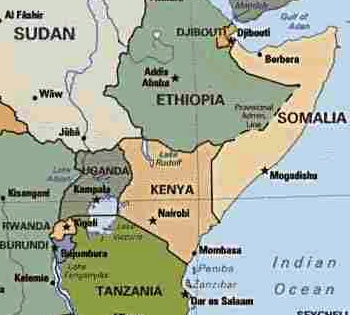
Why young Somalis join Al Shaabab

As the long-running civil war shows no sign of ending, over the past few months, many young Somalis have left the comfort of their home in different part of the world to come and fight in the home that they barely know.
There have been reports that the radical Islamist group al-Shabaab has been recruiting fighters from different part of the world to come back and fight in the war torn Somalia.
“Young people are targeted because of their idealistic nature and when they are not properly educated they can easily be manipulated” says Rashid Abdi Analyst for International Crisis Group in the Horn of Africa
He added that the young people from the Diaspora become easy targets for Al Shaabab because they find it hard to adjust to life in the west and at times the discrimination faced makes them reconsider.
“For the foreign recruits, it’s never about the money, it’s the jihadist ideology because you also have people paying their own air ticket just to come back, that’s not money, it’s their beliefs” remarks Abdi.
In August, US officials charged 14 people with providing money, personnel and services to the Somali militant group al-Shabab. The charges stem from four separate indictments in the US states of Minnesota, Alabama and California.
In two separate indictments, prosecutors charged Shafik Hammami, a former resident of the US state of Alabama, and Jehad Serwan Mostafa, formerly of California, with providing material support to al-Shaabab.
“Al Shaabab is a well resourced army, apart from having the money to pay their forces, they enjoy a strategic ideological well committed army,” says Abdi adding that the Islamic Insurgent are now targeting the young people from the Diaspora. “ the fact that over 4 million people live outside Somalia is reason enough for the radicals to target them” he said.
Somalia's youth have suffered 20-years of lawlessness, lack of education and employment opportunities, and have adopted acts of desperation to survive. The Insurgents group is one of the ways to survive.
The weak western Backed Transitional Federal Government has had hard time fighting the Insurgents. “Despite the International effort to help the TFG, they have not been able to pay their troops well because of the corruption, confusion of chain of command and parallel forces within the forces” he added

Ethiopian troops back in Somalia will worsen situation

Ethiopia back in Somalia
Ethiopian’s Prime Minister Meles Zenawi said he would send the soldiers in the unlikely scenario if the African Union's mission in Somalia (AMISOM) who is battling Islamist insurgents needs rescue.
If Ethiopia force goes back to Somalia, the Islamist rebels may get reinforcement from Somali community in the country and outside for the longtime historic conflicts Ethiopia and Somalia.
Ethiopia invaded the Horn of Africa nation in 2006 to oust the Union of Islamic Courts (UIC) which controlled southern Somalia but withdrew under a UN-backed peace deal early in 2009.
Its after the US backed Ethiopia invasion that the UIC decalred a holy war on Ethopia.
It's been almost two decades since U.S troops were forced out of Somalia after the "Black Hawk Down" battle. Now, the U.S. is backing a push by African states to add troops to combat Somali militants.
But Somalia experts who have watched violence spin in circles for nearly 20 years are warning that more troops will not bring peace, and will encounter fierce resistance from the dangerous militant group that claimed deadly twin bombings in Uganda last month.
According to the International Crisis Group, Analyst for the Horn of Africa, Military approaches have only helped to radicalize more youths and exacerbate fundamentalism in Somalia," he said. "The international community needs to realize that itscurrent and previous policies on Somalia have largely strengthened religious extremism and Somalis' distrust of the West."

Thursday, August 12, 2010
Islamist Group ban Christian Organisations in Somalia

Al Shaabab close down Christian organizations
The radical Islamists militant group Al Shaabab has just announced the closure of three Christian humanitarian organizations operating inside Somalia.
As for today, World vision, Adventist Development and Relief Agency (ADRA) and DIAKONIA, A Christian Development Organization have all been banned from conducting their operation in Somalia.
Through a press release, the Islamist group said that the organizations have been propagating Christianity in a Muslim country.
“Acting as missionaries under the guise of humanitarian work, the organizations have been spreading their corrupted ideologies in order to taint the pure creed of Muslims in Somalia” said the press statement.
All the NGO’s and organizations have also been warned if found to be engaging in similar activities they will be closed down and they will face disciplinary measures.
The press release from the office of supervising the Affairs of Foreign Agencies, Safeguarding the welfare of the Muslim population, Harakat Al Shaabab Al Mujahideen said they will take action against anyone propagating against Islam.
Despite the warning ADRA says it will continues its operation in Somalia and have denied claims that they have been propagating Christianity messages in Somalia.
“We are there to provide aid to the residents living in Somalia, nothing else. The ban is a big blow to the Somali people who majority of them were depending on the aid we are giving them” Said Joseph Njuguna project manager ADRA Somalia.
World vision Somalia has also agreed to have received the information but say that they are still having meetings to discuss way forward.
“We have just heard about the directive by the group, we shall have meeting to discuss this and then react to the information” said World Vision Communication Manager Amanda Oketch.

Tuesday, July 13, 2010
Al Shaabab threatens neighbouring countries

The Somali insurgents continue to protest over deployment of the African Union Peacekeepers in Somalia, took to the streets of Kismayo with automatic AK-47 riffles chanting slogans Intergovermental Authority Development and the UN backed Transitional Federal Government.
"We urge the Muslim people to join the jihad against the so-called IGAD members who are our enemies. We will attack them before they invade us," said Al-Shabaab commander Sheikh Bali who was speaking to the protesters in Kismayo.
The demonstrations also took place in Gedo, Middle Shabelle and Bay in southern Somalia, where mostly Al-Qaeda linked group of Al-Shabaab controls.
Leaders from Ethiopia, Kenya, Uganda, Sudan and Djibouti who met in an emergency summit in Addis Ababa decided to deploy 2,000 peacekeepers to Somalia to join other 6,000 peacekeepers from Uganda and Burundi.
The leaders also recommended United Nations to send an additional 20,000 peacekeeping force to Somalia. The protesters denounced forces from neighbouring countries especially Ethiopia which pulled out from Somalia last year after three years of occupied.
The deployment of the AU Soldiers led the Somalis insurgent group Al-Shaabab threatening that they will attack the capitals of Burundi and Uganda in revenge for rocket attacks by peacekeepers from the two countries.
The threat follows the killing on Thursday of at least 30 people in Mogadishu, the capital, by Amisom, the African Union's peacekeeping force to which Uganda and Burundi contribute troops.
Somalia 50 years on

Even as Somalia celebrates its 50th independent day on July 1st, there is very little or nothing to celebrate. Somalia remains a dangerous place to live even for the Somali residents.
According to analyst the troubled nation can feel peace when the locals realize the need to sit on themselves and that their problems of can never be solved by the international community.
For many Somalis, they are witnessing the 50th anniversary for the country that collapsed 20 years ago and 14 failed attempts to have a stable government. This day is celebrated in their houses with saddened faces and anguish of what they once called home.
For the last 50 years the country showcases the failure of state, a country ruled by guns between unified people and divided country and the future portrays hopelessness.
Somalia is a showcase of the failure of post-colonial state in Africa; the state imposed from top against the culture and social norms of the people, and the state and elites that do not belong to the aspiration of their people. Somalia can also show the resilience and audacity of the traditional African society and their social networks and its survivability.
The instability in Somalia was caused with a lot of issues including lack of freedom, divided opposition and the Ethiopia factor which has led to the open space of Somalia became attractive to terrorist groups after 9/11 and wrong policies and approaches deteriorated the situation.

Although for the short term period the picture for peace in Somali is depressing a lot can still be done in Somalia and it all comes back to the people who have to sit down and deal with the issues that divide them.
The UN backed government is threatened and this is clearing the way for the extremist Al Shaabab who have controlled the majority of the Southern Somalia. According to analysts the only way out for Somalia is having a government that people have accepted and agreed on by them.
Friday, June 25, 2010
Newspaper Editor killed

Jean Leonard Rugambage, the acting editor of a major newspaper in Rwanda, the Umuvugizi was shot outside his home on Thursday evening.
Claims made by the paper’s Editor in exile, Jean Bosco Gasasira said his acting editor was shot and killed late Thursday night in the Rwanda capital, Kigali.
He said Rwandan security forces killed acting editor Rugambage because the paper was investigating the shooting of Rwandan General Kayumba Nyamwasa in South Africa.
“I’m 100 percent sure it was the office of the national security services which shot him dead. This happened after publishing a story on the Umuvugizi website which cited Rwanda’s chief spy of being involved in the shooting of General Kayumba Nyamwasa in South Africa,” he said.
Police spokesman Eric Kayiranga has told the press that the police do not know who was behind the attack or what the motive was.
He said they were investigating. Gasasira said the article on the Umuvugizi website quoted information which showed that there was communication between Rwanda’s chief spy and his driver.
Monday, June 7, 2010

Lessons from Rwanda
By Fatuma Noor
Rwanda, a Spectacular sight to behold, settlement that radiates from a winding succession of steep terrace slopes and with beautiful hills and valleys.
A flame that burns at the Kigali memorial center for a 100 days in remembrance of the 1994 genocide dies the memory of turbulent ethnic rivalry in which countries social fabric was deeply affected.
The country which is still fighting to get out of the shadows of genocide is in many ways an African success story. Towards this the youths are deliberately given tasks to improve the country for their future.
With the large percentage being the youths, the Rwandan government has now signed a contract with different youth’s groups and association to contribute to the development of the country.
“The youths do things like cleaning the streets of Kigali, planting palm trees along the medians road to make sure that the country is green and attractive” said Charles Osidi who is the Director of Youths Associations at the Ministry of Youths.
A poster at the airport warns arriving visitors that the country has outlawed plastic bags, it is better for the environment and helps keep the streets clean. Indeed it does - there is little of the trash on the streets of Kigali that is ubiquitous in other poor cities
These Rwandan youth do all this purely on voluntarily basis get stipends from the council and in return they get to host the gardens.
“If someone is in the Association and maybe wants to have a party or wedding at one of the parks of Kigali, they are provided for free” said Charles.
With a large percentage being the youths, the country In a bid to promote youths self employment and development, a youth Fund was established.
Kojad a youth Fund was established 3 years ago and has been operational since then and its been used by the youths to generate income and more than Ksh. 600M has been loaned to the youths.
“The youth fund is meant to be loaned to either individuals or groups to generate income and provide employment for the youths” said Uwingeneye Moolestine the Manager of the Kojad youth fund.
Moolestine says that this is one of the Rwandan youth recovery plant and it has worked as more youths keep benefiting from the progress.
“The people who use the motorbikes are all the beneficiaries of the youth fund, some businesses here are all beneficial of this youth fund, we have less of idol youths” said Moolestine.
But inlike the Kenyan youths, The Rwandese youths most of them being the witnesses and survivors of the genocide are on their way to recovery and making the country a better place to live.
Unlike the Rwandan government which is doing much to promote the leasers of tomorrow, Kenya could borrow a leaf from the Rwandan government.
“ al of a sudden we have a huge number of young people who are unemployed and the Kenyan government has no prospects for them, this makes them idol and act up” said Raphael Tuju the Director Kenya Hope Foundation and an advisor to the president.
Tuju added that despite the many initiatives started in Kenya for the youths, little or no effort is being seen to helping them.
“Kenyans could learn a lot from the Rwandan govermet, the country has prospered like this because of the youths” said Tuju.
Ethnic tension in Rwanda is nothing new but they are on the recovery process, Kenya mirrors a same history of ethnic tension, a good example what happened in the 2007 disputed elections.
In 1994, the ethnic tensions started in Rwanda and Military and militia groups began rounding up and killing Tutsis in masses which spread all over the country.
However, now The Hutu-Tutsi relations in Rwanda today is that of a brother to another. “the ethnic differences is all behind us we are all Rwandans” said Gilbert Mucharama, our tour guide in the trip.
He adds that there is no more mention of the Hutus and Tutsi’s in Rwandans and even its risky calling one by which ethnic group that they belong to.
“Even calling one a Tutsi or a Hutu is a risk as you can face to 3 years in prison just for that identification” he tells me.
The only identification that one would know one is a Tutsi is they are tallerr, slender while the Hutus are a bit plumpy and shorter as compared to the Tutsis.
“The ethnic differences is what caused this country to crumble down into peaces, we have learnti don’t think we want to go back to where we were 16 years ago” said Gilbert.
Ethnic tensions in Kenya mirrors a similar situation but if we could learn from Rwanda after the genocide this is one such lesson
Also as Kenya is in the process of trying the perpetrators of the 2007 post election violence, we could follow suit and form a local tribunal to try out some of the perpetrators.
In Kenya who have opted for the ICC as compared to local tribunal has generated lots of debate, however the Rwandese believe that they could have opted for that much earlier.
With debates as Kenya doubts its own judicial system, it could follow suit and form a system which will try the perpetrators
As a result, the Rwandan government has turned to a traditional system of justice known as "gacaca" to relieve the burden on prisons and courts. Gacaca hearings are traditionally held outdoors (the word loosely translates as "justice on the grass"), with household heads serving as judges in the resolution of community disputes. The system is based on voluntary confessions and apologies by wrongdoers.
With Over 250,000 community members trained to serve in panels of 19 judges in gacaca courts all over Rwanda. The tribunals will operate in several stages, first identifying victims, then suspects - and finally holding trials.
According to denis Wahawayo, teh Director of the Gacaca court said taht it has been a process and more people have been tried with this court.
“ here the local residents will give testimony for and against the suspects, who will be tried in the communities where they are accused of committing crimes.” Said Dennis
.jpg)
RWANDANS SPEAK ABOUT SURVIVING THE UNIMAGINABLE
By Fatuma Noor
Between April and June 1994, an estimated 800,000 Rwandans were killed in the space of 100 days.Most of the dead were Tutsis - and most of those who perpetrated the violence were Hutus.Even for a country with such a turbulent history as Rwanda, the scale and speed of the slaughter left its people reeling. Sixteen years later the country has made great strides in its reconciliation process but despite the passing of time the memories of the 100 days are still very clear to many survivor victims.
Sixteen years ago Redempta Jaramba,27, witnessed as her family of 15 burned to death in the western part of Rwanda, although she was too young then to understand, the memory of what happened is still very clear in her mind.
She was only 11 years of age when the Rwandan genocide happened which left more than 850,000 Tutsis massacred including her family.
Now as she sits at the Kigali Memorial centre where more than 250,000 people, including her entire family are buried in a mass grave, she recalls the events of that fateful day.
With tears rolling down her cheeks she tells me that it was too late for anyone else in her house to run as the men who were surrounding her house had locked the house from both sides and already doused the house with petrol.
“It all started with gunshots and the next thing we had men surrounding our house, my father threw me out using the back window as all doors were closed, but no one else could fit” she recalls.
+of+Redepmta+at+the+podium+telling+her+testimony+of+how+she+witnessed+her+family+was+killed+during+the+1994+genocide.jpg)
Redempta, who was the youngest in the family, recalls that her father tried to break down the door but in vain and in no time the house was up in flames and as much as she cried for help no one could come to rescue her or the family.
“I stayed there watching, too young to understand why people would kill each other, trying to understand what people had done to each other to attract the awful attacks against one another, against neighbours, friends and even family” she says.
Weeks later with nothing to eat and surviving by the grace of God, the 11 year old just sat alone and lonely among the burned bodies of her father, sick mother, sisters and other family members "The killers had set fire to everyone and everything that was left," she says quietly. "So, I sat among their teeth and bones, the only thing that was left of my family before Red Cross who came to pick the remains of those that survived rescued me."
Redempta was then taken to a children’s centre where she found other hundreds of children and widows who were provided rescue by the centre.
A decade and a half later, she still cannot believe that her family's Hutu neighbour, the owner of a local shop they sometimes visited and whose children she played with one day without provocation just burned her family alive.
“Jonah’s father was someone who knew us well, we bought milk from him, went to school with his son and even ate at his house, he was the only one I recognized among the four whom I watched torch my house from my hiding place” she says.
She remembers the dates only too well. “It was on a Wednesday April 27, we had spent the entire week in the house as it wasn’t safe for us, at least that’s what my father said” she says. “I just wouldn't die," she adds.
“Some nights I can’t sleep and I have no one to call family, I replay the incident over and over I my head and 16 years later, my memory is still clear and it doesn’t seem ready to go away anytime soon,” said Redempta.
Even visits to counsellors providing help to the children at the centre did not ease the pain that she still feels or make her forget the trauma she witnessed.
Her scars have grown no less livid with time, she is yet to forgive Jonah’s father.
“To this moment I don’t understand why he did it, if only I could meet him now that am a grown woman. I don’t know what I would do to him.” She tells me. After she left the orphanage the Red Cross placed her in, Redempta wanted to go back and just look at the man who killed her family but her aunt whom she now lives with refused and said it wasn’t still safe for a Tutsi” she tells me.
Her understanding of the genocide came to her at the orphanage because the older children and the widows were always talking about the whole sorry event. “They were saying things, my father never told me about the hatred that existed between the Hutus and the Tutsi’s, it’s here that I understood,” she says.
Redempta wishes that she could have given her family a proper burial but since she cannot she visits the mass grave once every month and tries to go back just so to remember the loved ones she lost every time she gets a chance.
“I come here twice every month to place flowers at the memorial and say prayers for the people buried here with my family,” she said.
She is yet to forgive the murderers of her family and she says that for her life can never be the same again because of the genocide. “ I cannot trust anyone, be they a neighbour or even family. I believe they could all turn on you like my neighbour did, which proves how cruel the world is” she says.
“This is not what I had planned for, I wanted to have children and they would have people they would call family, but now even if I start my own family, I have no one to call my family, my children will not have grandparents who could spoil them with love” she laments.

Tuesday, May 25, 2010
Man succumbs to jigger infection in Kenya

BY FATUMA NOOR
A jigger-infested man died in Kandara district over the weekend. Officials of Ahadi Kenya, an anti-jigger organisation, had gone to Kagira village to help victims register as voters when news of the man's death arrived.
"The family of the victim is at pains explaining how they have tried all manner of treatment to save their loved one," said Ahadi Kenya ambassador Cecilia Mwangi. Most of the victims could not be able to hold a pen or use the thump print as their hands were badly infested. Ahadi Kenya had hired vehicles to take them to registration centres in Kandara.
The team moved from house to house picking the victims. Ahadi Kenya executive director Stanley Kamau appealed to the government to allow victims with old generation IDs to register and take the exercise door to door.
He added that the 45 days given by IIEC for the registration are not enough for people who cannot even get out of their homes to renew their IDs and register as voters. More than 300 people have so far died due to jigger-related complications in the last three years according to Ahadi Kenya.

BY FATUMA NOOR
THE US has asked Kenya to expand the Daadab refugee camp to ease congestion in one of the largest refugee camp in the world.
Reuben Brigety, the Deputy Assistant Secretary of State for the Bureau of Population, Refugees and Migration said the US has been in talks with the" Kenyan government to expand the camp and increase screening services for refugees.
Brigety raised concerns over recruitment of young refugees by Somalia's al Shabaab militants and urged the Kenyan' government to protect refugees from these insurgents. "We are aware of the threats that refugees face and we are reaffirming that they must remain neutral," he said.
Brigety also said Kenya has the right to close its borders if there are security concerns but it needs' to adhere to the international law on refugees.
"Kenya closed its borders with Somalia in 2007 but more Somalis continue to pour into the country to escape fighting in their country.
Subscribe to:
Posts (Atom)